
For years, mushroom forecasts have been static reports: a weekly bulletin, the same for an entire region. Useful, but with a limit. It grows old quickly and does not know your forest.
Collective predictive algorithms change the approach to mushroom forecasting. Instead of a fixed text, a system that updates with data and tightens on your area.
A bulletin speaks to a region. An algorithm learns from your area.
In short
- Static report: the same for everyone, rarely updated, generic.
- Collective algorithm: updates with data and focuses on the area.
- The more searchers participate, the more accurate it becomes for all of them.
The static report: convenient, but blind to detail
The bulletin has one advantage: it is simple. But it treats an entire region as a single block, and does not distinguish the north side from the south, the 400 meters from the 1200.
- The same for everyone, from the sea to the mountains.
- Rarely updated: a still photo from a week.
- It does not distinguish altitude, exposure and microclimate.
The collective algorithm: a learning system
Area data, anonymous
Aggregates signals within a 50 km radius, anonymously. It tells you how the area is doing, without exposing anyone's place.
It improves over time
The more exits are recorded, the more the model refines the estimate for that area. It's a network effect: it grows with those who use it.
Because it's the future (honestly said)
No system is a crystal ball: it remains an estimate of probability. But a local and updated model beats a fixed bulletin, because it talks about your forest and not the regional average.
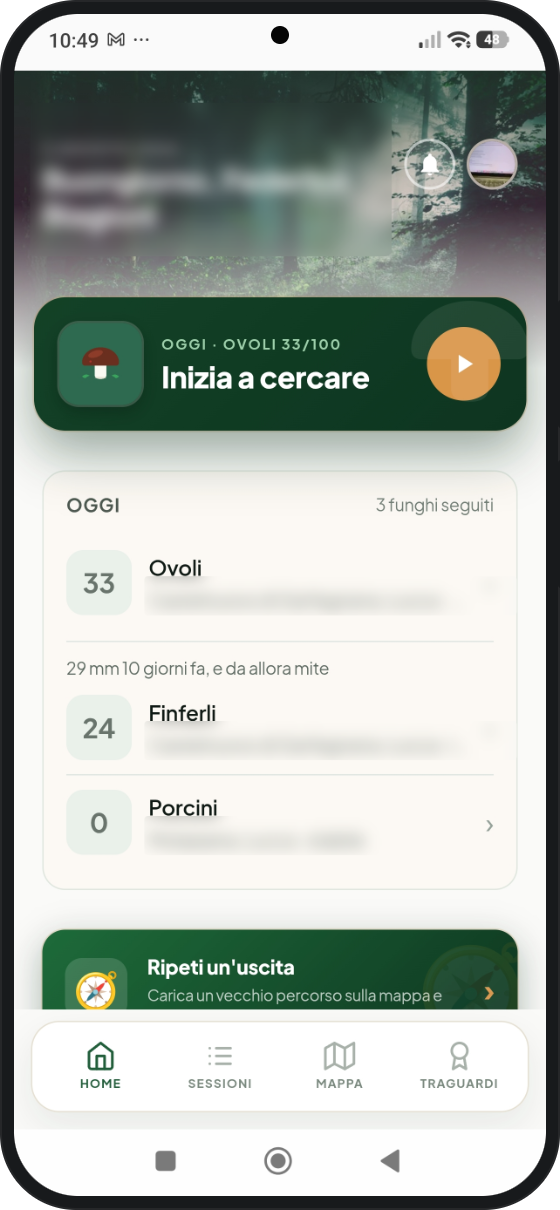 Collective systemIt improves over time
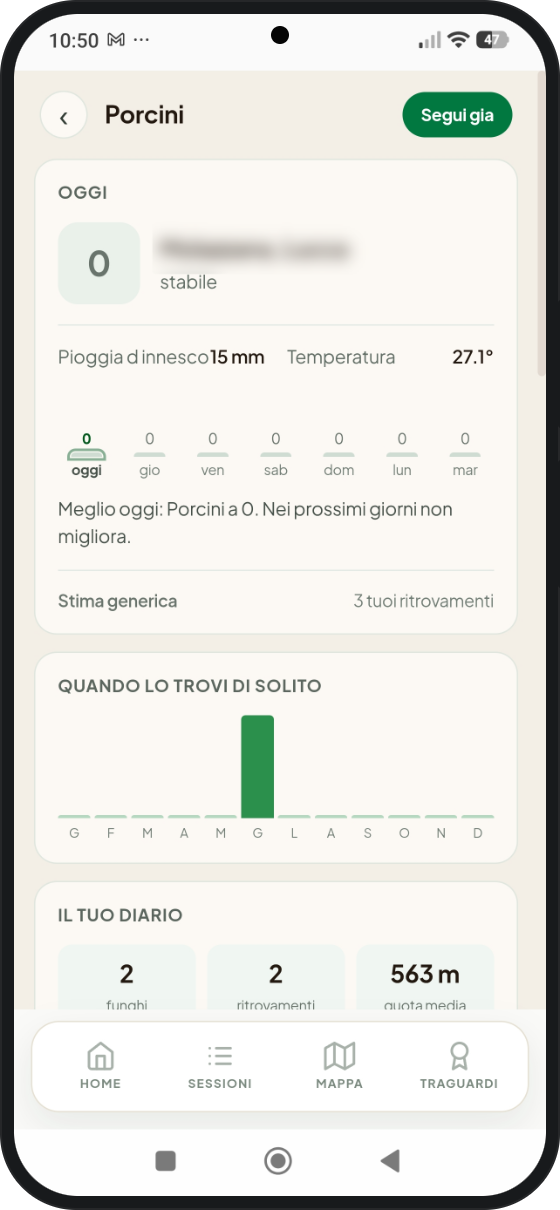 Dynamic forecastingNot a bulletin
From bulletins to the algorithm
I started by reading the regional bulletins. They were good for understanding the weather, not for deciding whether to go out in my woods on Tuesday.
I wanted something that learned from my area and my releases, not a text that was the same for half the region.
— Federico, Mush Scout
Grow the algorithm in your area
Each participating searcher, anonymously, refines the local forecast for everyone. The three sources — science, 50km aggregated data, and personal diary — work together from day one.
The coordinates of your seats are never exposed. You download it on Google Play and contribute to the model of your area.