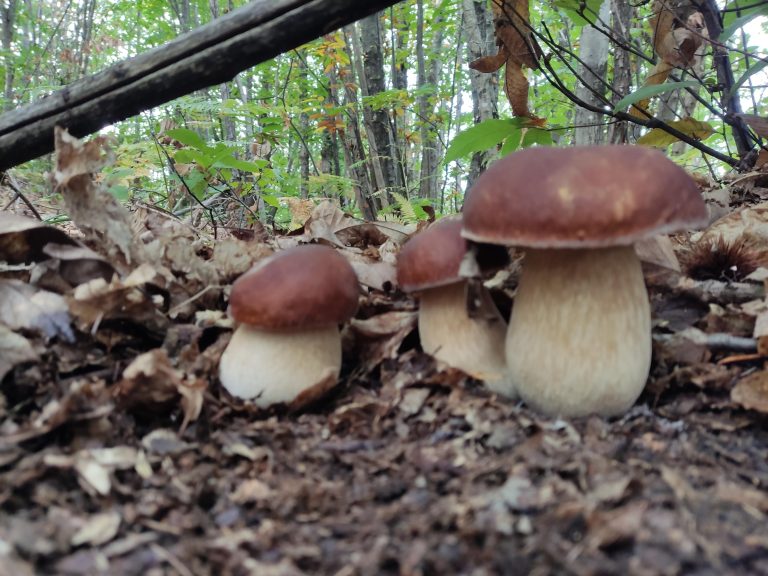
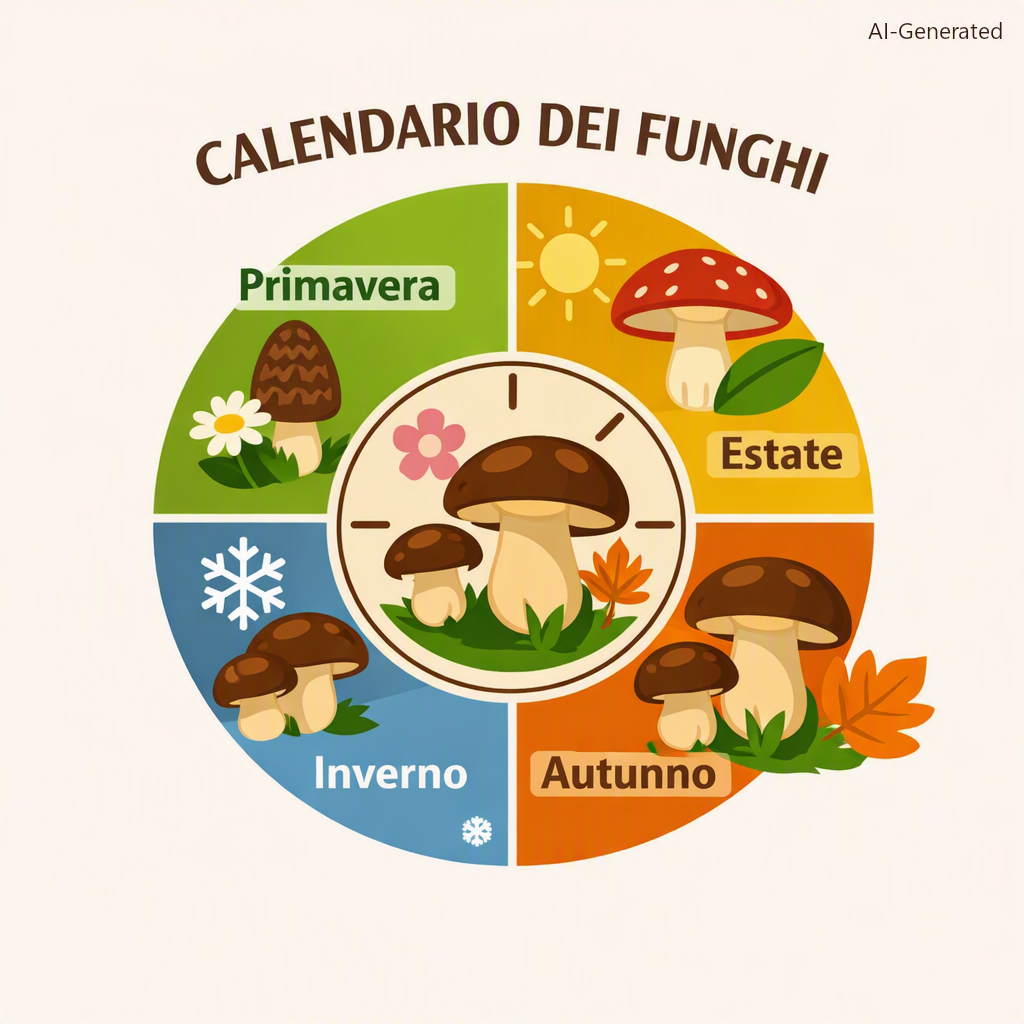
The forest doesn't produce mushrooms only in autumn: it simply changes what it offers, season after season. Knowing the complete calendar means never returning empty-handed, even outside the peak of porcini mushrooms.
Spring: blackthorns and first outings
Between March and May, the forest slowly awakens. Blackthorn is typical of this period, along with a few other early species. It's not the season for large numbers, but it's a good time to reacquaint yourself with the forest after the winter.
Summer: summer porcini, caesar's mushrooms and chanterelles
From June to August the summer porcini mushroom and the good ovolo mushroom arrive (Amanita caesarea) in warm oak and chestnut woods, and chanterelles, which with the right humidity can appear in abundance for weeks.
Autumn: the peak of the season
September-November is the time of greatest variety: to the porcini are added honey fungus, black trumpets and drumsticks. It is also the period when more species coexist in the same forest, with more choice.
Winter: what remains
Between December and February the search narrows: some cold-resistant species, like oyster mushrooms, remain available in more sheltered forests. It is the most peaceful season, good for planning the next.
Summary table by species
| Species | Months | Environment |
|---|---|---|
| Blackthorn | Mar–May | Clearings, forest edges |
| Summer porcini | Jun–Jul | Chestnut forests, oak forests |
| Caesar's mushroom | Jul–Sep | Warm oak and chestnut forests |
| Chanterelle/golden chanterelle | Jun–Oct | Mixed forests, moss |
| Autumn porcini | Sep–Nov | Beech forests, fir forests, chestnut forests |
| Honey fungus | Sep–Dec | Stumps and logs |