
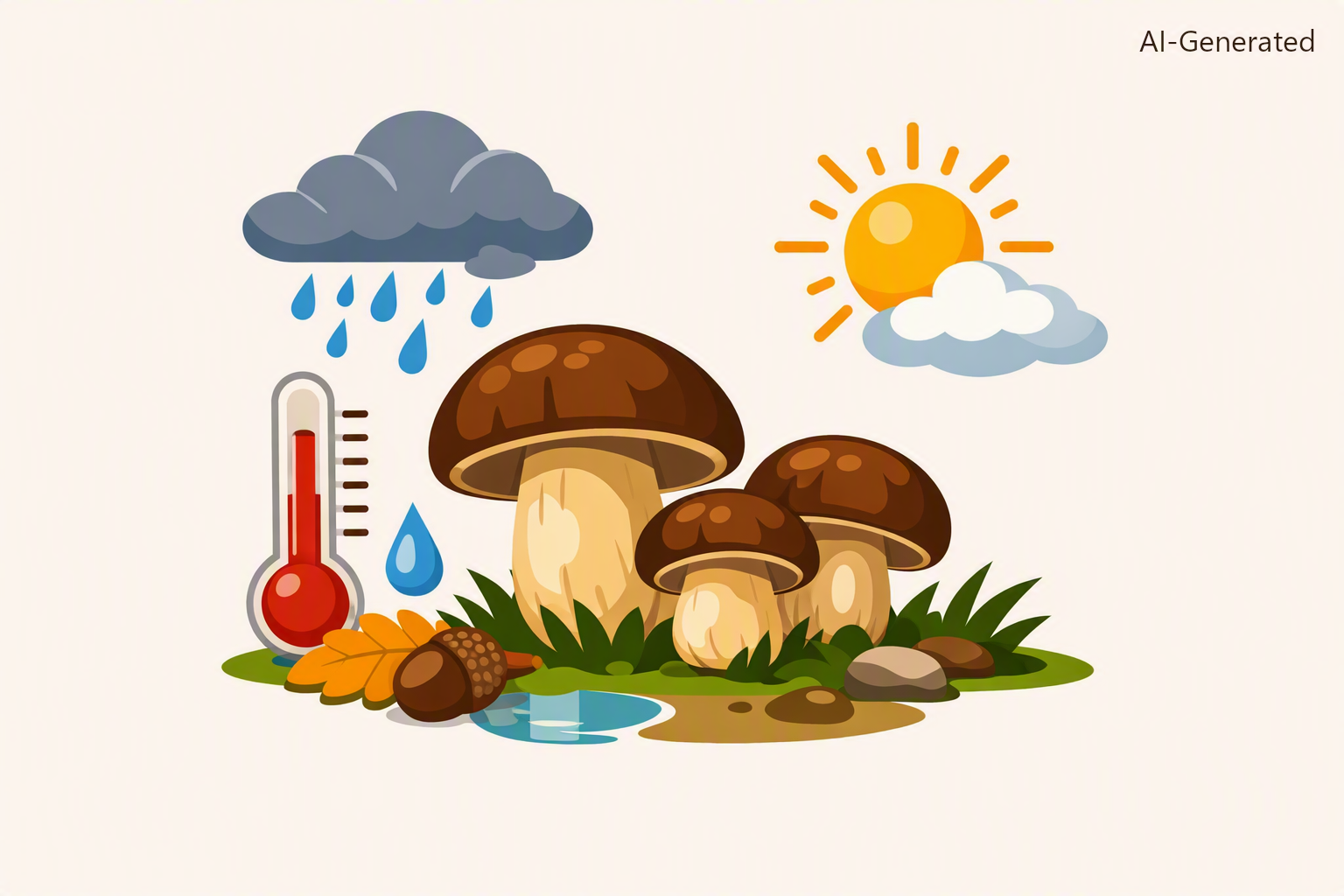
More than anything, the weather decides whether an outing will be good or empty. Rain, temperature and humidity work together: understanding how they combine is more useful than any “secret place”.
Rain: how much and how
It's not enough that it rains: it matters how. A slow, prolonged rain that penetrates deep into the ground is much more effective than a violent storm that flows on the surface and is not absorbed. The soil must retain water to allow the mycelium to activate.
Temperature and thermal shock
The drop in temperature that follows the rain is often the decisive trigger: a difference of a few degrees between the heat before and the cool after, especially at night, seems to "warn" the mycelium that it is time to bear fruit. Each species has its thresholds: summer porcini tolerate higher temperatures, autumn porcini prefer an already cool climate.
Humidity and wind
Soil humidity must remain high for several days: dry wind and intense sun can quickly nullify even abundant rain, drying the surface layers of the soil where the mycelium is most active.
The mushroom weather score
Putting rain, temperature, humidity and wind together in your head every time is complicated. This is why MushScout summarizes them in a daily score from 0 to 100: a quick way to understand, before leaving, whether the conditions are bad or whether it is better to wait a few more days.
When it is NOT worth going out
After periods of prolonged drought, with temperatures below freezing, or after days of dry wind that have dried out the newly wetted soil, the chances drop significantly. In these cases it is better to wait for the next useful rain rather than consume an empty trip.