
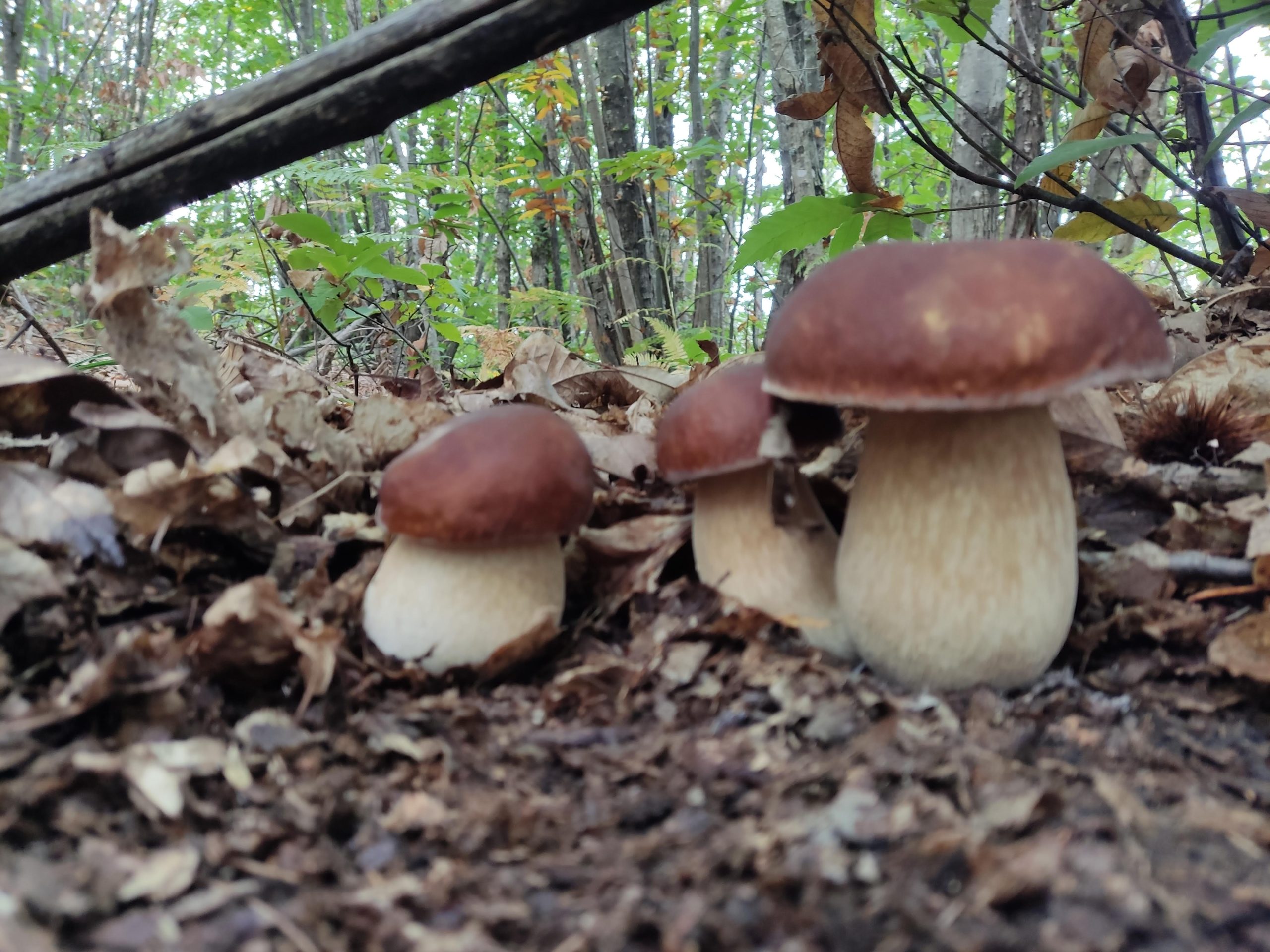
Porcini mushrooms are born when rain and temperature meet in the right way: in Italy this happens starting from June in the hills, with the real peak between September and October. There is no fixed date — there is a window, and learning to read it is half the job of walking in the woods.
What does the birth of porcini mushrooms depend on?
The mushroom we collect is only the "fruit" of a much larger organism, the mycelium, which lives in the soil in symbiosis with the roots of the trees. For it to produce fruiting bodies, three conditions are needed together: sufficient soil humidity (therefore rain, not dew), a temperature compatible with the species, and a temperature drop — the change between the heat before the rain and the coolness after is often the actual trigger. For this reason, a summer rain accompanied by temperatures that remain high does little, while the same rain with a drop of a few degrees in the following days can start a whole storm.
The month-by-month calendar
June–July: the first outings, especially on the hills and in the lower chestnut groves. It is the period of the summer porcini, which behaves differently from the autumn one and tolerates the heat better.
August: the research moves to higher altitudes, where temperatures remain cooler. In the mountain beech and fir forests, with summer storms, the first significant bursts are often found.
September–October: the heart of the season. The rains become more regular, temperatures drop naturally at night, and the production range drops week after week. It is the period in which the best conditions coincide in the greatest number of forests.
November: the last throws, often only in the lowest and most sheltered areas, before the cold stops everything until the following year.
Summer porcini and autumn porcini
Under the common name "porcini" hide different species, with different times. The summer porcini mushroom (Boletus reticulatus, often called also aestivalis) grows in warm weather, in chestnut and oak groves, from June. The black porcini mushroom (Boletus aereus) prefers the warm woods of plains and hills, often paired with summer woods. The “real” porcini mushroom (Boletus edulis) and that of the pines (Boletus pinophilus) arrive later, in autumn, and cope better with low temperatures: they are the protagonists of the September-October peak.
How to understand the right time close to home
The general calendar is a starting point, but each area has its own times: altitude, exposure and type of forest move everything by weeks. The most reliable way to learn timing of yours forest is keeping track of when it rains and when you find — a diary, even an informal one, allows you after a couple of seasons to anticipate the rain instead of discovering it by chance.
Frequently asked questions
How many days after the rain do porcini mushrooms appear?
Typically between 7 and 14 days, but depends on altitude and temperature: here you can find the complete guide.
At what altitude are they most found?
It changes with the season: in summer it is better to go up to altitude for the cool air, in autumn the production range progressively descends towards the valley.
Is it better to go out in the morning or in the afternoon?
Early morning is generally preferable: lower temperatures, higher humidity, and less chance that someone else has passed before you.