
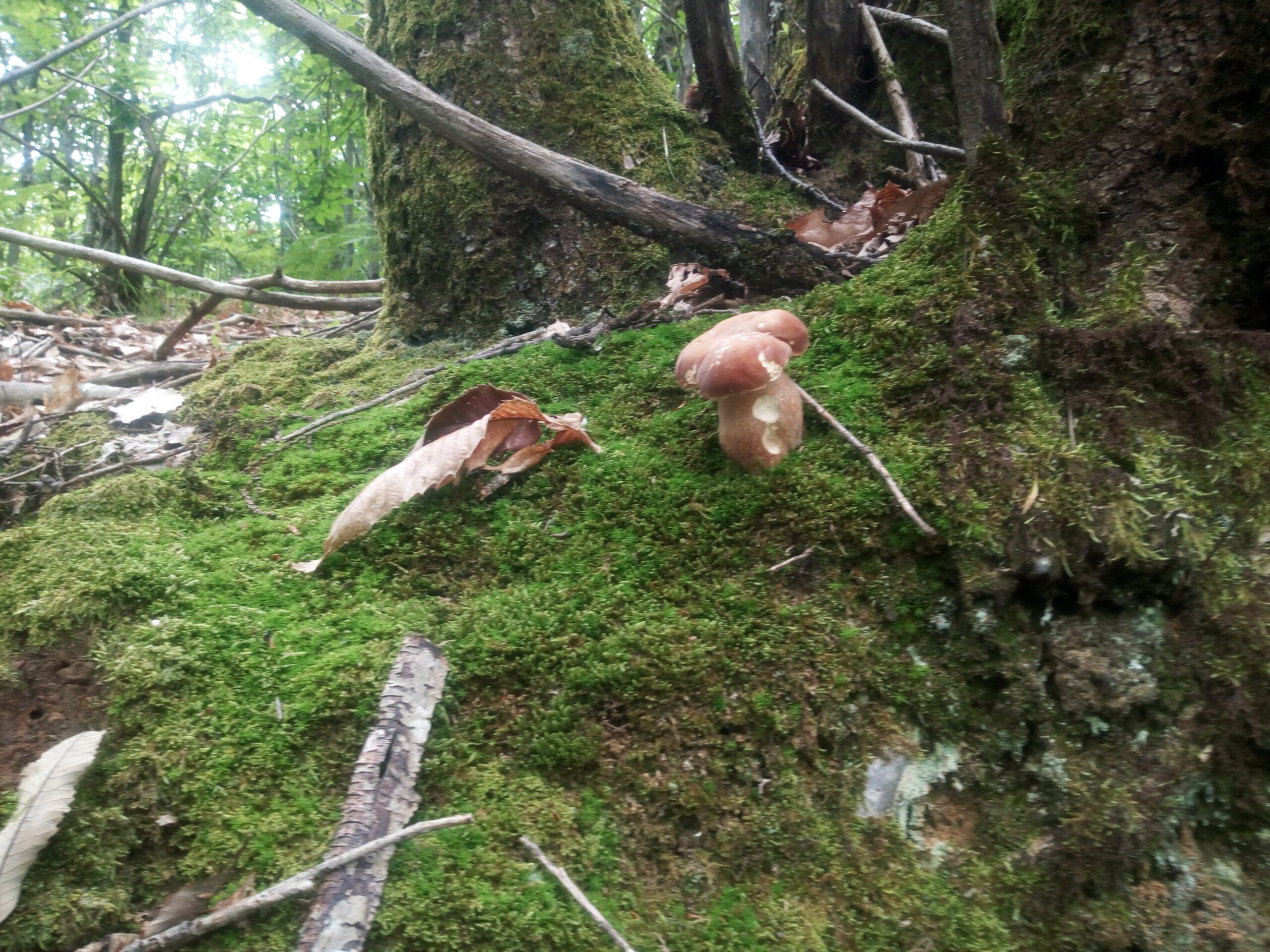
Porcini mushrooms don't grow everywhere: they need specific trees, suitable soil and conditions that change with the season. Recognizing these signs before even entering the woods saves hours of walking in vain.
The porcini woods
The porcini mushroom lives in mycorrhizal symbiosis with the roots of specific trees: chestnut, beech, fir, some oaks and pines for the pinophilus. Each species of boletus has its own preferences - the summer and black boletus love warm chestnut and oak woods, the edulis and pinophilus are more often found in high-altitude beech and fir forests. Recognizing the type of forest before entering it is the first useful filter.
The right amount season by season
The “right” quota is not fixed: it changes with the calendar. In the height of summer it is best to go up, because the mountain coolness reproduces ideal conditions. In autumn, as temperatures gradually drop in the valley, the production range is lowered: the areas that produce little in September can become the best in October.
Exposure, soil and microclimate
North-facing slopes retain more humidity and are often more productive in the hot months; those in the south may perform better when temperatures drop. Soft soil, rich in moss, with decomposed leaves and without water stagnation is a good sign. Clearings just inside the woods, where light filters in but the ground remains moist, are often places to check.
Read the map before leaving
Even before putting on your boots, a satellite map helps to recognize the type of forest (the foliage of the chestnut and beech trees can be distinguished from that of the conifers) and to identify promising areas to check in the field. Marking the areas that pay off, exit after exit, is what transforms a generic area into a personal point of reference.
Mistakes to avoid
The most common: searching in the wrong woods for the species you are chasing, going out too soon after the rain without giving the mycelium time, and trampling or ruining the ground around the finds, which compromises future outings in the same spot.